
INTERNATIONAL DAY OF PEOPLE WITH DISABILITY 2025
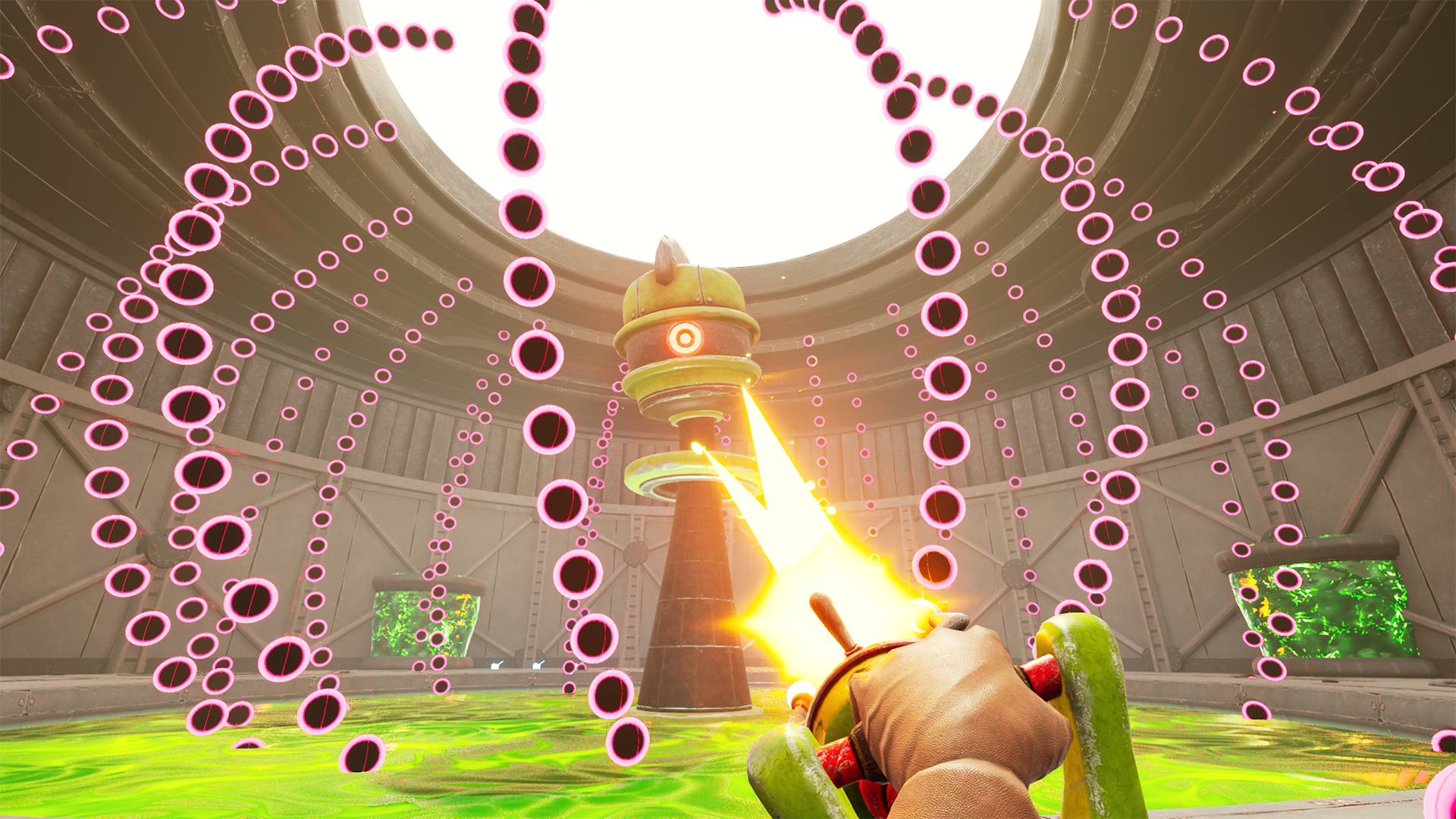
Image: Game play still from Bears in Space, Broadside Games’ AGDA Award-winning game
As Queensland continues its rise as a global digital games hotspot, the local community is also making incredible strides to increase accessibility and inclusivity across both the sector and the games being developed here.
To mark the 2025 International Day of People with Disability on Wednesday 3 December, Screen Queensland spoke with two Queensland studios to find out more about their achievements in accessibility.
Broadside Games
Ipswich’s Broadside Games won the 2024 AGDA Award for Excellence in Accessibility for their Screen Queensland-supported game Bears in Space. A retro-futuristic adventure unleashing players inner bear to destroy oil-thirsty robots, Bears in Space also imbeds accessibility at the forefront of the game experience with careful consideration around ways to provide flexibility with visual clarity, precision platforming and robust difficulty options.
Garth Edwards, studio co-owner and co-creator of Bears in Space said they were inspired to make the game as playable as possible for as many people as possible. “Games should be played the way you want them and a lot of the options we included were quite simple to implement, they just required the thought to actually do them,” Garth said.
“From allowing players to tweak the amount of damage they can give or even turning that off if they want, to considerations around environmental platforming and designing characters with visual clarity at the forefront—tweaking the user interface for enhanced clarity, disabling options for camera effects like screen shake and camera roll—it’s all about giving the player choice over how they get to enjoy the game.”
Garth said that community outreach helped Broadside Games pick up on areas of Bears in Space where accessibility for players with visual impairment could be improved. “One player was legally blind but still able to play the game and his feedback around contrast to better spot the enemies led to us modifying their materials and adding extra fresnel so they really popped.”
For other indie studios looking to elevate accessibility in game design, Garth suggests simply talking to people who are going to be using these options. “We are working on a VR project that is targeted towards people with quadriplegia. We’ve run several co-design sessions with a great of people who have really helped us better understand their requirements and it’s been so influential on the project.”
Just as the modifications to Bears in Space and co-design sessions for the VR project were simple to implement but hugely impactful, Garth also feels it doesn’t need to be complicated when it comes to opening up more career pathways for devs with disability to enter the industry.
“It just requires being aware of someone’s specific needs and being able to accommodate them. Maybe it only requires a work-from-home option to make the all the difference for someone with mobility considerations to be part of your team.”
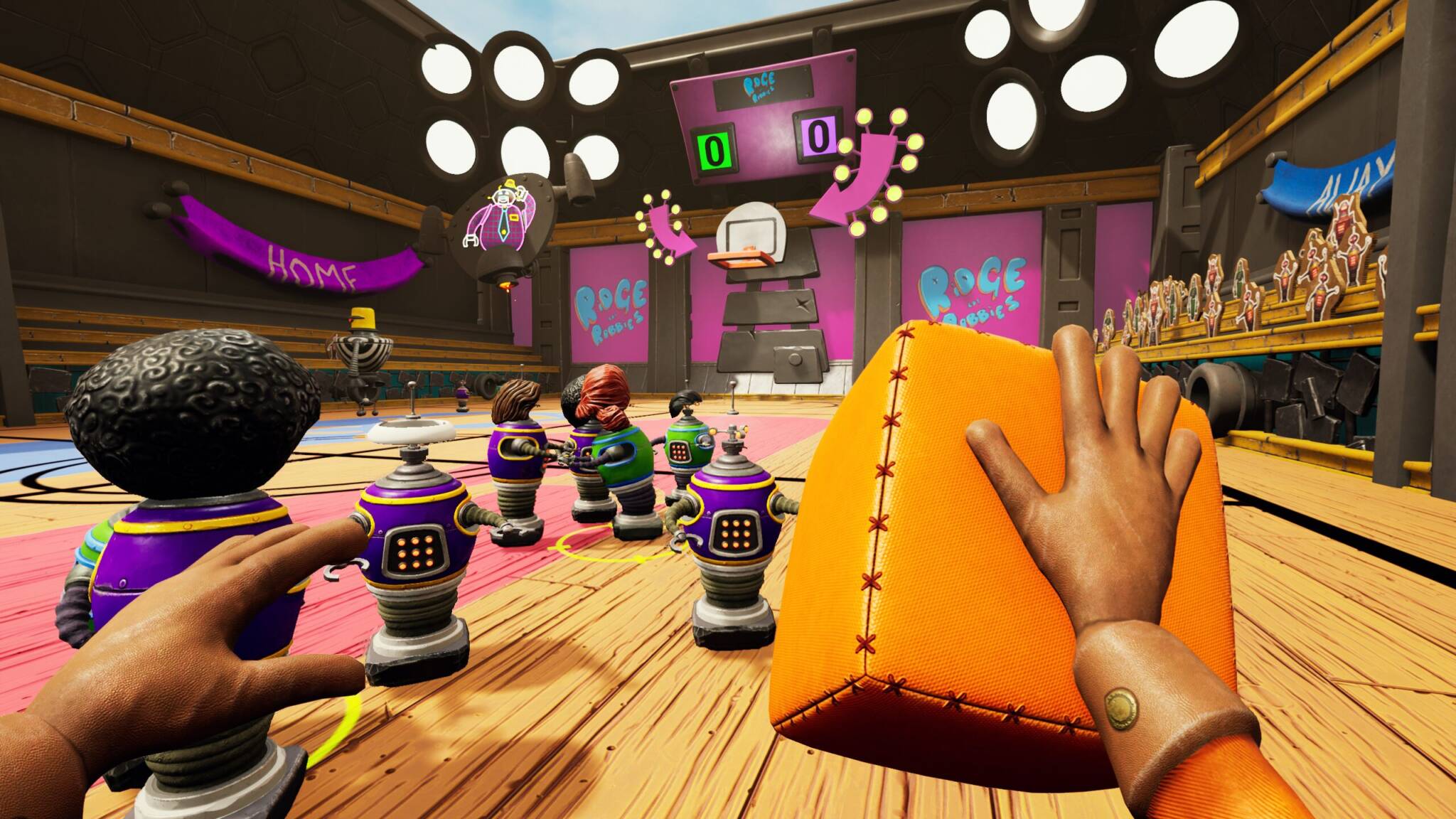
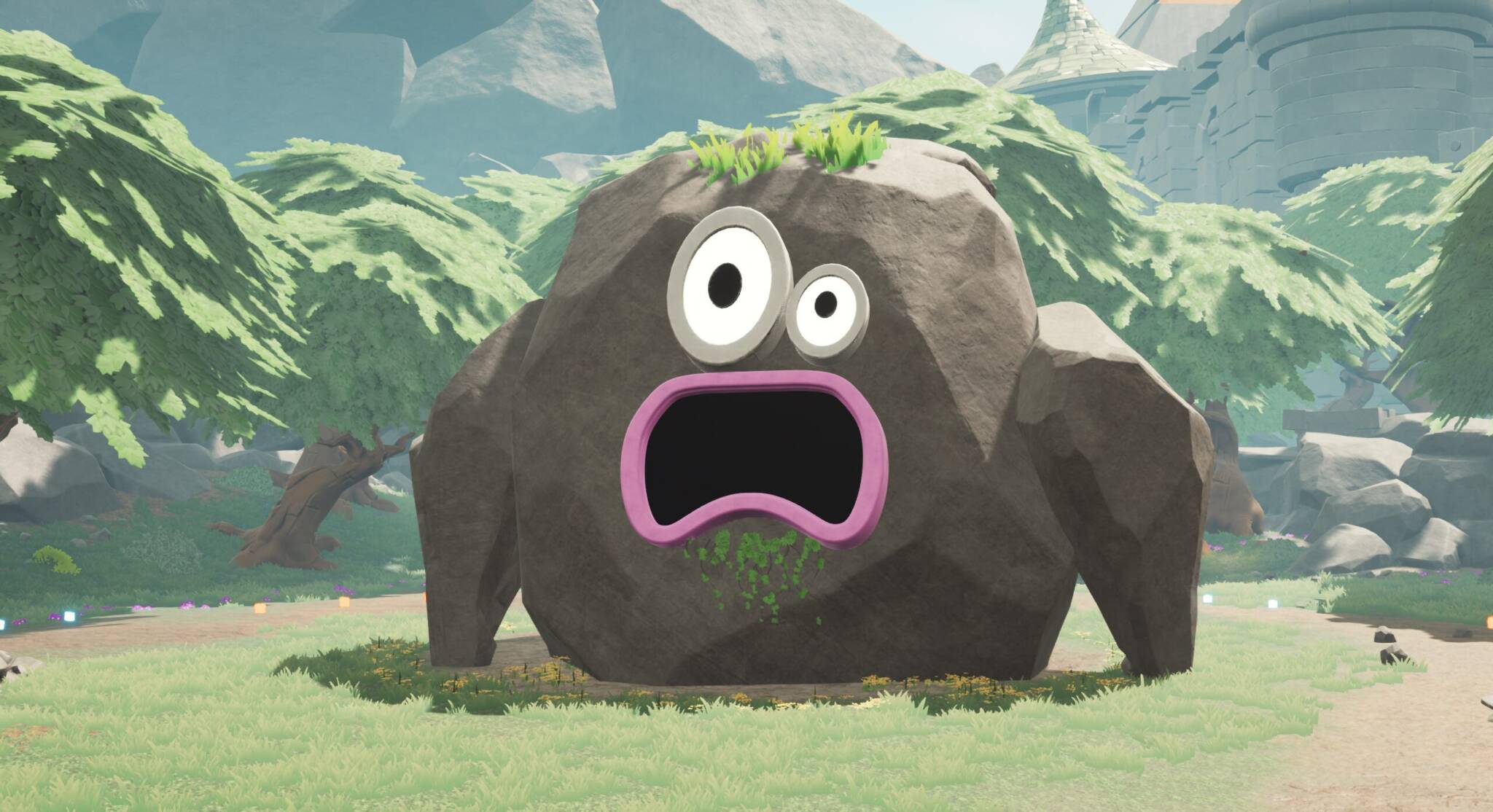
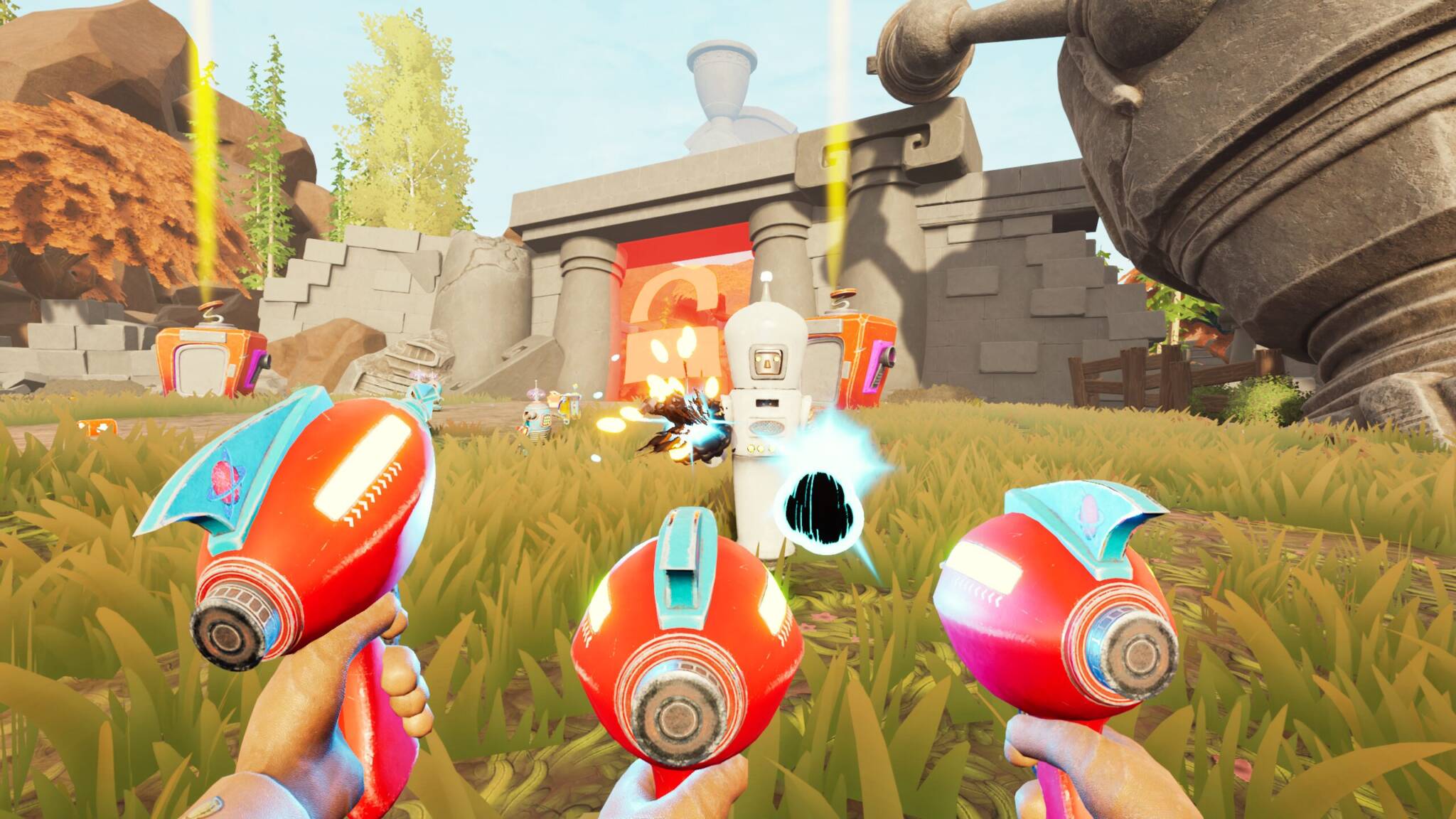
Images from Bears In Space, courtesy of Broadside Games
READ MORE: BROADSIDE GAMES USE VR FOR ACCESSIBILITY PROJECTS
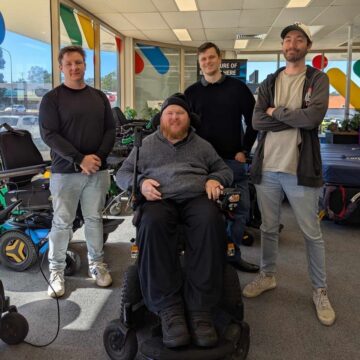
Image: Members of Broadside’s co-design team at Move Mobility
Broadside has been working with the University of Queensland (UQ) on several rehabilitation-focused VR projects. One is a virtual cafe for speech pathology clinicians to engage with their clients and role-play real-life scenarios, including distractions and noises, so that the clients can be pushed outside of their comfort zones but remain in a safe environment. Clinical trials have proven highly positive.
Another project for wheelchair users is being developed with Dr Robert Cuthbert and John Hitchens, who is himself a powered wheelchair user. Choosing a powered wheelchair is a very personal and very expensive choice, and there are significant differences between the drive types (front-wheel, mid-wheel and rear), so Broadside has been working with UQ to create a VR app that allows peopleto determine what might suit them best before any financial outlay.
Co-design sessions have helped Broadside to design the app to create the most authentic experience possible while also optimising mobility considerations within the app design itself to ensure it’s suitable for people with a variety of requirements.
Gameloft Brisbane
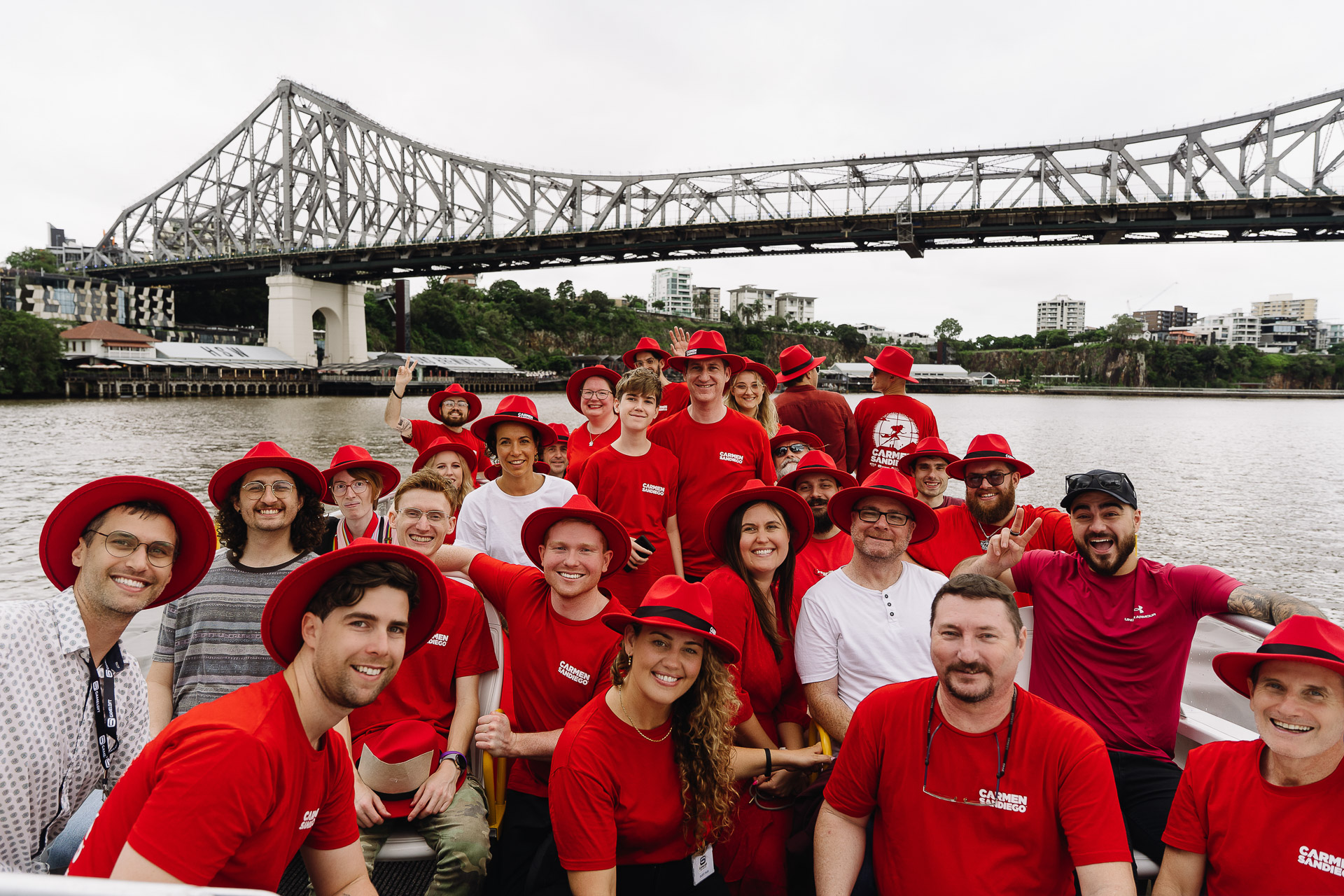
Image: Gameloft Brisbane’s team
Gameloft Brisbane has been established for over a decade and is now home to more than 100 employees across all disciplines. An end-to-end studio, the team develop premium titles including the Screen Queensland-supported Carmen Sandiego. Officially accredited as a Great Place to Work® in November, they proudly employ people with disability, not only as part of their commitment to a more inclusive sector, but also because an accessible workplace is essential to attracting and supporting the best talent.
Prioritising accessibility and inclusivity over the last few years has proven to be a genuine game-changer for Gameloft Brisbane, reshaping the studio’s culture in noticeable, everyday ways. The studio recognises that game development can be fast-paced, high-pressure and emotionally demanding, which is why creating an inclusive, supportive and accessible workplace has become essential.
“We’ve worked hard to build diverse and representative teams—because we know diversity is not only the right thing to do, but also a creative advantage. Through inclusive hiring practices, our teams bring multiple perspectives that enrich storytelling, art direction and worldbuilding., said Manea Castet, Head of Studio.
Some of the foundational elements of Gameloft Brisbane’s approach include flexible and hybrid work—so team members can manage health, sensory and energy needs—Mental Health First Aid training across the studio, 24/7 wellbeing support through Sonder, quiet/relaxation spaces, and adjustments to lighting and workspace setups to support visual comfort and to reduce strain. Additional considerations include phased returns to work based on personal needs and circumstances when required.
As Caddy, HR Specialist at Gameloft Brisbane, says, “these aren’t big flashy policies—they’re simple, practical adjustments that help people feel comfortable, respected and able to thrive.”
When it comes to games development, Gameloft Brisbane is committed to reviewing game narratives for inclusive representation, prioritising accessibility features early in design and consulting educators and community groups for inclusive content insights.
For studios looking to strengthen accessibility and inclusivity, Gameloft Brisbane highlights several effective practices:
- treat flexible work as standard practice, not an exception
- create truly accessible internships, traineeships and entry pathways
- use skills-based hiring, not rigid interviews that don’t suit everyone
- encourage open conversations about adjustments so people don’t feel they have to hide anything
- bring devs with disability into design conversations early
- invest in outreach—schools, community groups, regional areas—to help people see a future in games
- representation in internal and external events helps dismantle stigma and encourages aspiring devs to see themselves in the industry
- job crafting and neurodiversity-friendly workflows unlock exceptional performance while fostering belonging.
As Caddy says, “At the end of the day, when we make our workplaces more welcoming, we help more people build careers in the industry—and we make better games because of it.”
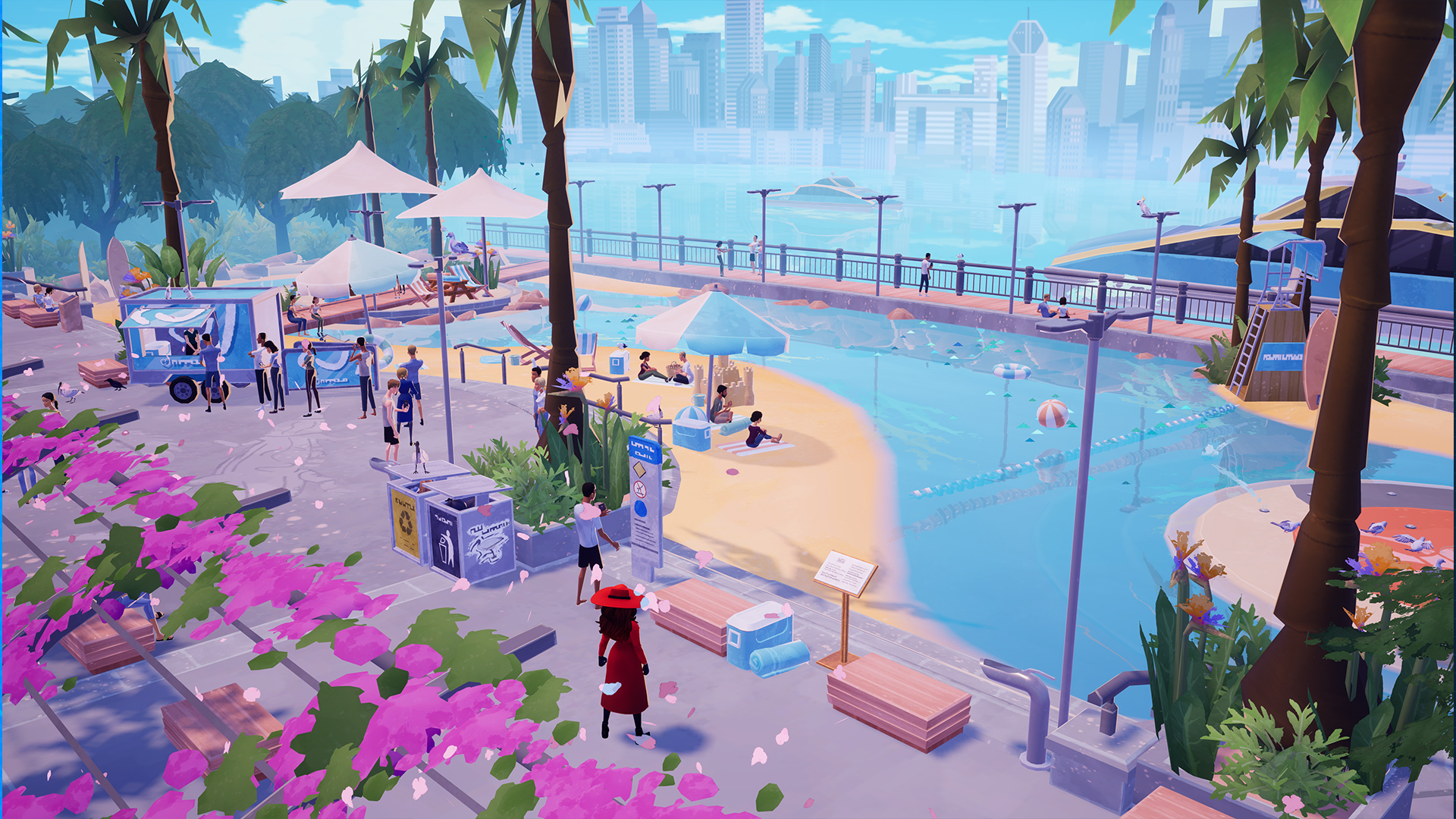

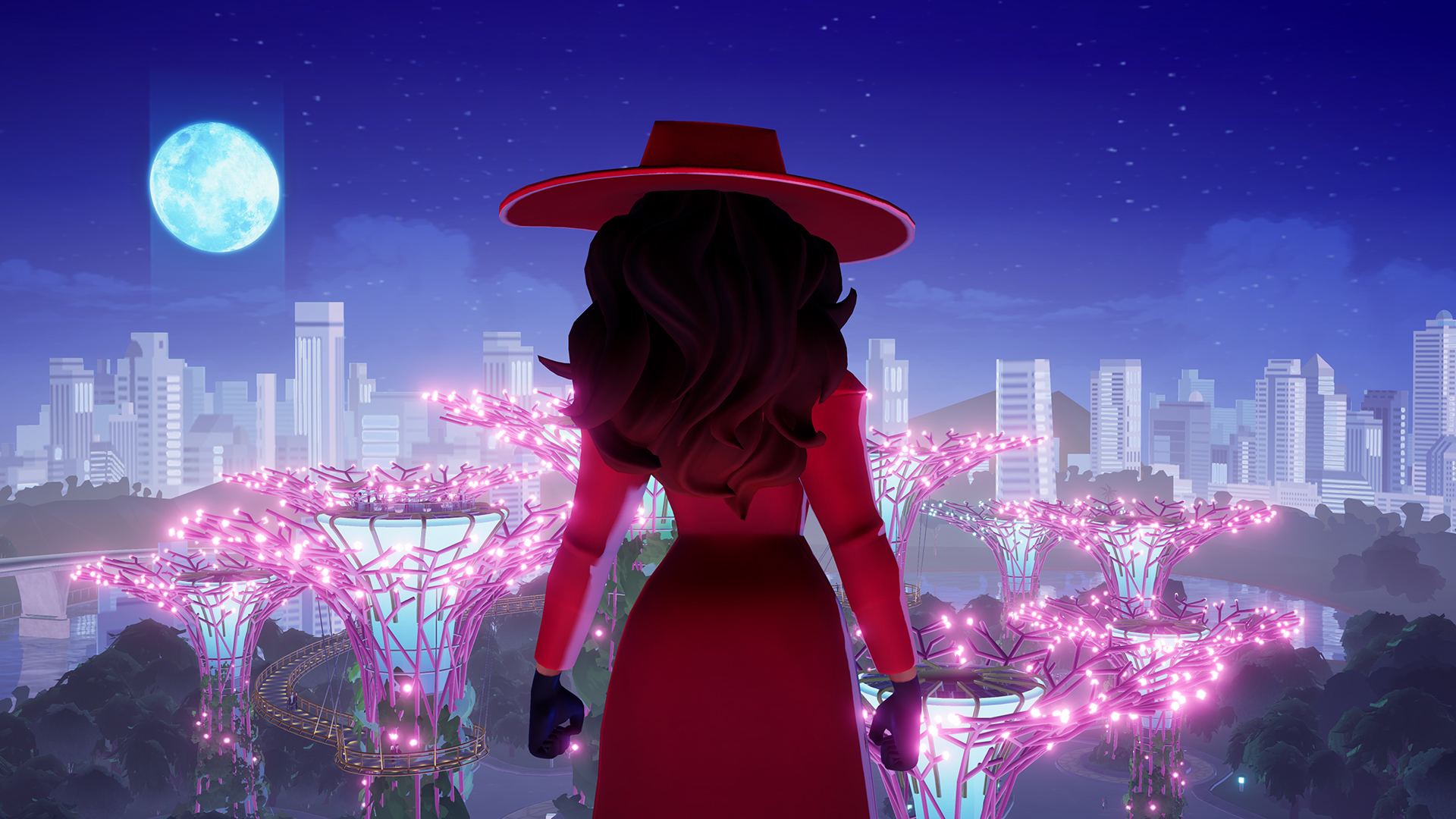
Images from Carmen Sandiego, courtesy of Gameloft Brisbane
READ MORE: LILY BOWDITCH, ASSOCIATE PRODUCER
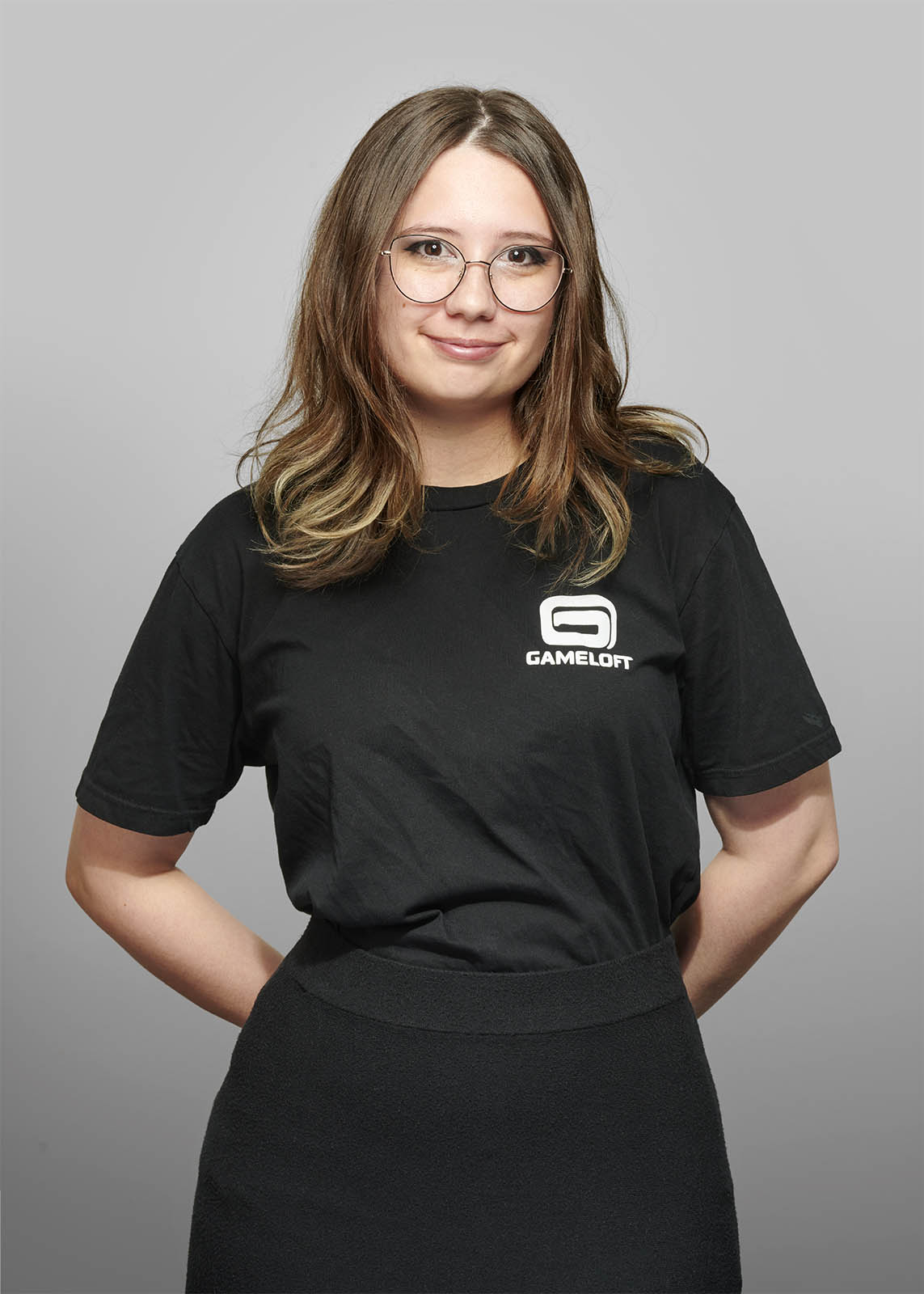
Lily Bowditch is an Associate Producer at Gameloft Brisbane and lives and works with an invisible disability. “I have always felt like my leads have been very accommodating of my disabilities. I also feel very comfortable letting them know that I might need more time to rest or if I need to work from home when I am having a difficult day. They are always very understanding of this and what help I would need to be my best self at work,” Lily says.
“Our studio is incredibly comfy, and often I just need to find somewhere nice to sleep over lunch. I always feel comfortable doing this, and when people at work ask me about it and I explain my reasons why, it’s met with support every time.”
Lily’s lived experience has also helped Gameloft improve their game design. “I feel like during my time in QA, I was able to comment a lot on accessibility and design choices in controls or small minigames that might cause someone like me pain to complete. As I experience chronic pain (usually from repetitive movement), I could give a lot of insight on what felt cumbersome or difficult to do, which I felt was heard and respected,” Lily says.
Accessibility options are discussed as a team within every stage of development. “In production I feel I use my own experiences to help others, and recognise when someone needs some support or accommodation.”
Find out more
Celebrating International Day of People with Disability in Australia
Business Queensland resources for making your workplace more accessible
Screen Queensland funding for digital games
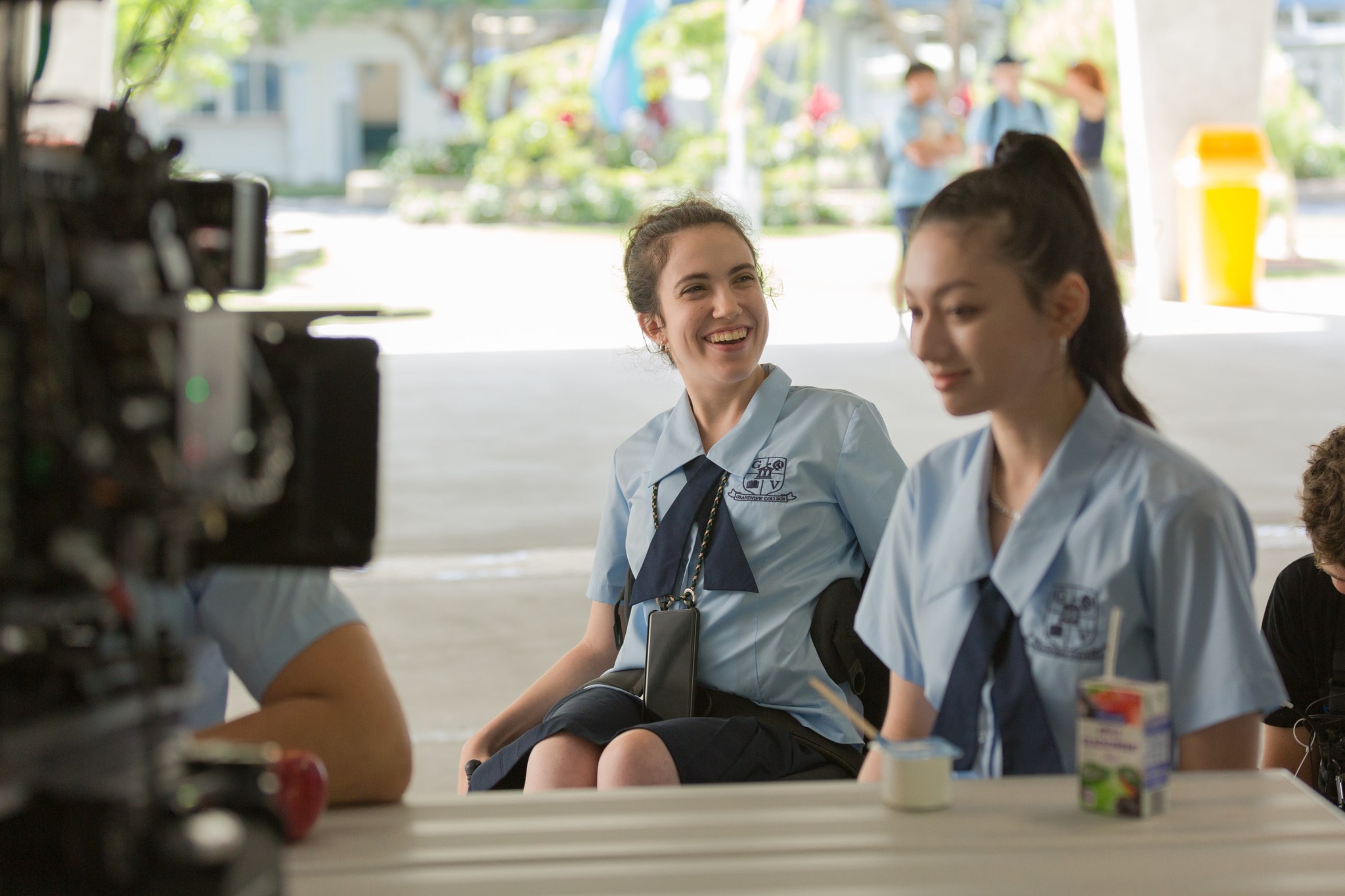
Watch Audrey featuring actor and disability activist Hannah Diviney on Netflix
Hannah Diviney pictured on set of Audrey, courtesy of Orange Entertainment Co.